


Georgia Georgia’s opposition attempts a political reset with new alliance Georgia’s opposition are seemingly attempting something broader than simply defeating the ruling Georgian Dream party. by Anna Gvarishvili • 7 min read Share ▲ From left to right: Giorgi Vashadze of Strategy Aghmashenebeli; Gigi Tsereteli of European Georgia; Tina Bokuchava of the United National Movement (UNM); and Zurab Japaridze of Girchi — More Freedom. Photo via social media.
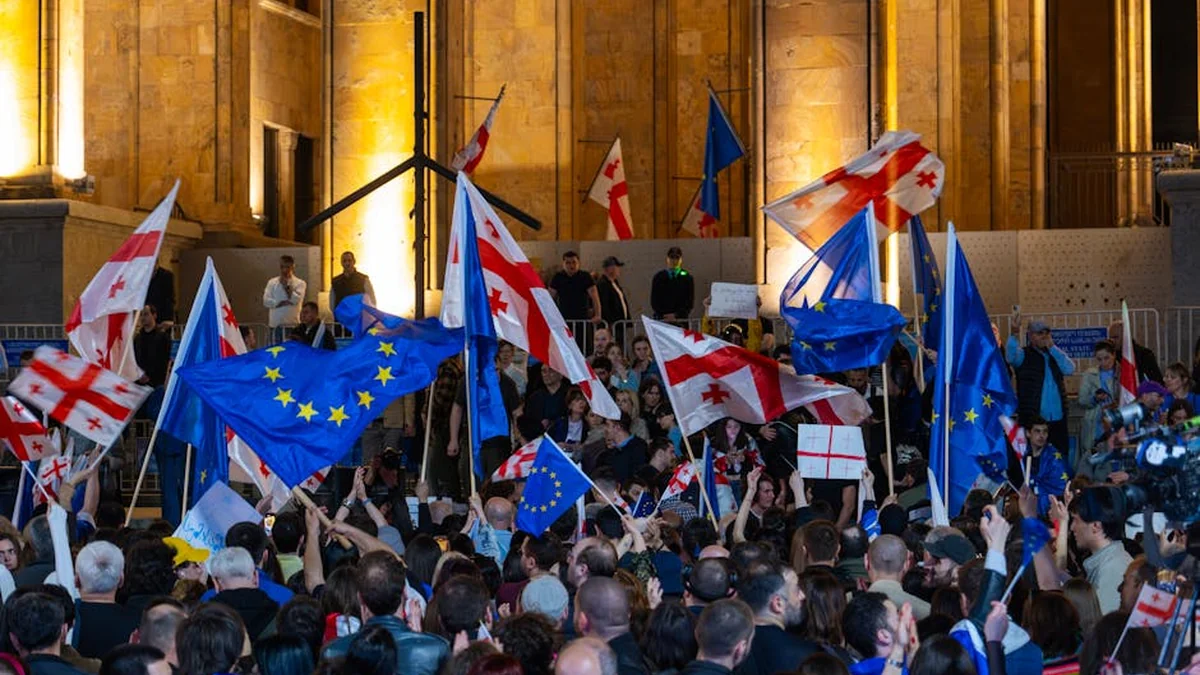
As Georgia’s political crisis approaches its 500th day of street protests, nine pro-European opposition parties have formed a new alliance , not only to challenge Georgian Dream’s rule, but to attempt something Georgia’s fragmented opposition has long struggled with: resetting the country’s political system itself. The alliance is built around three principles: unity without uniformity, meaning parties retain their ideological identities while coordinating protest and communication strategies; the creation of a credible democratic alternative; and a joint strategy focused on expanding protests, increasing international pressure, and presenting Georgian society with a viable political alternative. The parties — United National Movement (UNM), Ahali, Girchi – More Freedom, Droa, the Federalists, Freedom Square, Strategy Aghmashenebeli, European Georgia, and the National Democratic Party — reached such an agreement on 4 March.
Members of the opposition alliance deliver a press briefing. Official photo. ‘We, the national democratic political forces of Georgia, recognise that this is a vital struggle for the survival of the Georgian state and for securing our historical place in the civilised world.
This is not merely a fight to replace a bad government. What is being decided now is where the new “Iron Curtain” will fall, and on which side our children and grandchildren will live’, the alliance’s joint statement reads. The final document — combining strategy, mission, and a detailed code of conduct — was negotiated for months.
In Georgia’s political environment, where alliances tend to appear and disappear faster than election promises, skepticism would be understandable. Yet the very fact that so many parties — whose leaders have often been bitter rivals — managed to agree not only on a shared document but also on binding rules of cooperation marks a notable step. ‘A systemic reset of the Georgian political spectrum’ ‘I honestly cannot recall another political agreement where the rules of cooperation were written out this clearly’, Girchi – More Freedom leader Zurab Japaridze tells OC Media .
The code of conduct regulates how the parties will interact with one another, aiming to prevent the familiar cycle of internal conflicts that has long weakened Georgia’s opposition. Zurab Japaridze. Photo via social media.
Japaridze, who spent seven months in prison for boycotting an anti-opposition parliamentary commission before being released in December 2025, has since used nearly every public appearance to emphasise the importance of unity among Georgia’s democratic forces. When asked whether this alliance reflects what he had previously advocated, he answers cautiously. ‘This is the best result we could achieve at the moment.
This unity came at the cost of many compromises. And that’s a good thing. It’s a step forward’.
Supporters of the initiative argue that what distinguishes this alliance from previous attempts at opposition unity is that it is not simply directed against the ruling Georgian Dream government. Instead, they say, it is meant to challenge the political system itself and restore trust in a political landscape where many voters feel unrepresented. ‘I see this process as a systemic reset of the Georgian political spectrum’, Tamar Chergoleishvili, leader of the newly founded Federalists party, tells OC Media .
Tamar Chergoleishvili. Photo via social media. Chergoleishvili compares the process to the biblical journey of Moses and the Jewish people through the desert before reaching the promised land.
In her view, Georgia has spent more than three decades wandering through its own political desert since regaining independence from the Soviet Union, searching for a stable liberal democratic identity. Now, she believes, the country may be approaching its final chapter. Unlike many previous political initiatives, she argues, this alliance has emerged in response to public demand.
‘This is coming from Georgian society. It’s their mandate. And now is the time’, Chergoleishvili says.
Both Chergoleishvili and Levan Tsutskiridze, leader of the recently established Freedom Square party, emphasise that public demand is precisely what should ensure that the parties remain committed to the agreement. They also share another vision for the alliance’s future: preserving the distinct identities of political parties rather than dissolving them into a single bloc. ‘We believe Freedom Square has its own independent and unique path’, Tsutskiridze tells OC Media .
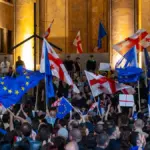
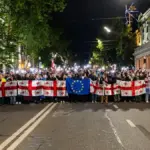
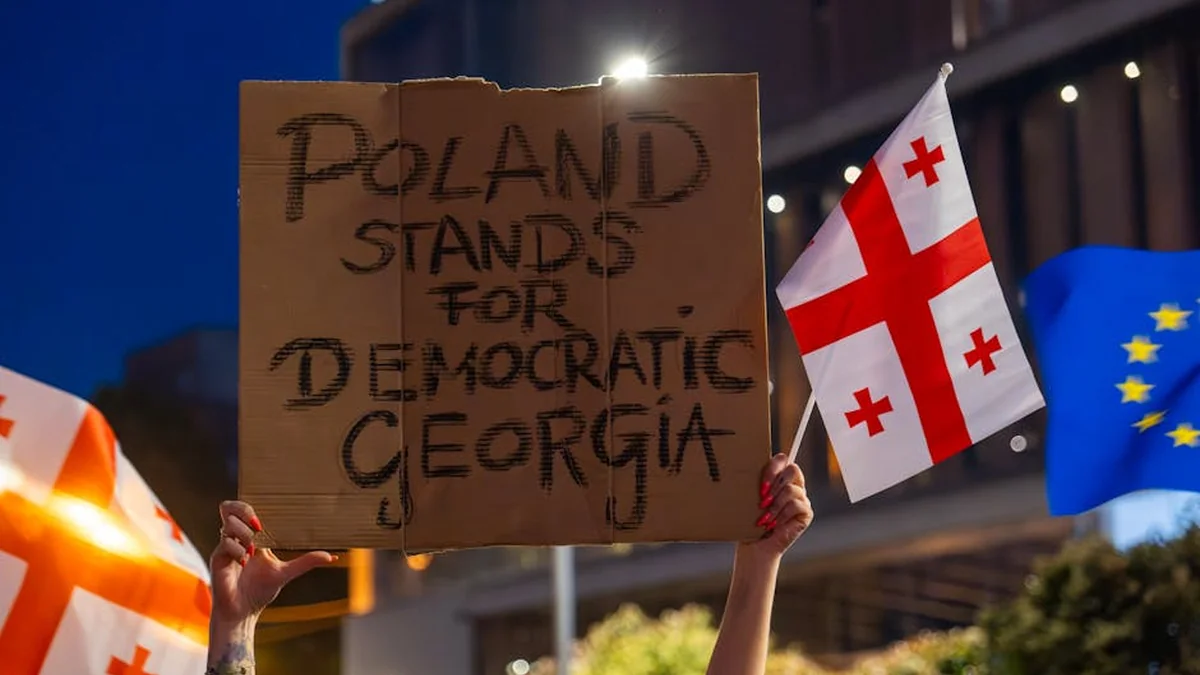
‘Of course we will fully honour this agreement and cooperate closely with the other parties, but we will continue our own political journey’. Amidst state pressure, a small Georgian party seeks a ‘new stage’ for change Freedom Square sees anti-government resistance as important, but not enough on its own. OC Media Mikheil Gvadzabia ‘We must demonstrate that we are the alternative’ Georgians have been protesting in one form or another since the spring of 2024, when the government reintroduced the foreign agents law , often referred to as the Russian law, targeting independent media and civil society organisations.
After Prime Minister Irakli Kobakhidze announced on 28 November that Georgia would halt its EU accession negotiations, the protests became a daily occurrence . Yet despite significant mobilisation, the energy on the streets struggled to transform into a clear political process capable of producing change. Over time, the number of people attending protests gradually declined.
There are man
Topics: #georgia #opposition #political