

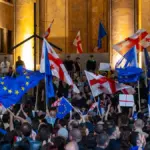





Georgia’s parliament recently passed controversial legislation, sparking concern from key international partners. Germany, France, and Poland have jointly voiced their worries regarding the new laws enacted on March 4th. These nations, collectively known as the Weimar Triangle, released a statement expressing serious reservations about the significant restrictions placed on foreign funding and political engagement within Georgia.
The ministers argue that the revised regulations deliberately contravene Georgia’s obligations to the European Union, further solidifying the government’s restrictive policies toward civil society. The legislation is seen as extending state control over political and public activity to an unprecedented degree, posing a threat to freedom of association and expression. Independent media, human rights advocates, experts, and civil society representatives are particularly vulnerable.
These changes impede Georgia’s progress in fulfilling its commitments under the Association Agreement with the European Union, a development noted by the European Council and confirmed in the 2025 enlargement report. The Weimar Triangle reaffirms its unwavering support for the Georgian people and the organizations dedicated to the nation’s democratic and European future. They underscore their commitment to Georgia’s sovereignty and territorial integrity within its internationally recognized borders.
The “Grants” law, which also criminalizes the non-recognition of the government and introduces penalties for political activity, has been met with strong criticism from germany, france, and poland.
Topics: #georgia #germany #france


Germany, France, and Poland have expressed their anxieties concerning restrictive laws in Georgia.